"I am a diverse individual with multiple interests. Besides my passion for photography and writing, I am passionate about promoting and protecting the health of individuals and communities, and I recently discovered a passion for teaching and training.
I started my medical training in Lisbon over 20 years ago, in Lisbon. After finishing my medical degree—which included an Erasmus mobility program in Paris—I enrolled in the specialty of Public Health.
During my training to become a field-work professional, I discovered that I liked to read, learn, search, research. I also discovered that the reality I experienced during my first years in a public school—contacting children and adolescents from different socioeconomic backgrounds, some of whom were being left behind—was being addressed in the study of health inequities. I started developing my research skills in this topic and, in 2015, I earned my Master's in Public Health. The thesis, which focused on health inequities in diabetes and hypertension in the northern region of Portugal, was published in a peer reviewed indexed journal (link: https://www.actamedicaportuguesa.com/revista/index.php/amp/article/view/7016).
Also in 2015, I had the opportunity to join the SILNE-R project (a Horizon 2020), where I worked within a team of European experts in epidemiology, political science, qualitative research, and economics. My PhD thesis, which was on health and social policies, was defended in 2019. It aggregated seven papers in epidemiology and economic evaluation of social and health policies, with a focus on tobacco prevention. It was hard, but I absolutely enjoyed my PhD: I explored systematic reviews and quantitative and qualitative methods, spanning from a local to a cross-country perspective. I was lucky to have a great supervisor.
Since then, I collaborated as an expert with the Portuguese National Health Council and as consultant in the World Health Organization. I authored several studies on COVID-19 - we cannot close our eyes to such a pandemic/syndemic - I became the principal investigator of the MothER Income InequaliTy project (EEA Grants-CIG) and started supervising several Master's and PhD theses, most of which focus on the analysis and evaluation of health policies.
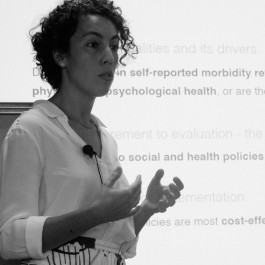
I now work as an Assistant Professor in the Faculty of Medicine of Porto University. I am responsible for the Policies & Health Lab, which is integrated in ITR (EPIUnit/Institute of Public Health of Porto University). I am co-coordinator of the Public Health curricular unit of the Medicine Integrated Master (3 ECTS), co-coordinator of the Health, Well-Being and Architecture, a pedagogical innovation course from the University of Porto (3 ECTS), and the coordinator of the Health Policies, Systems and Services (6 ECTS) and Global Health (3 ECTS) curricular units from the Master's in Public Health. I coordinate the Specialization course in Public Health (65 ECTS) in the Institute of Public Health of Porto University.
I am passionate about knowing how the contexts where people live in affect their own health and their communities', both social, physical, and political contexts. I am particularly interested in understanding the processes behind the adoption and design of health and social policies, and their effect on health, namely in different socioeconomic groups. And I am passionate to share this knowledge with earlier generations of medical doctors and public health medical residents."
Pedagogical experiments:
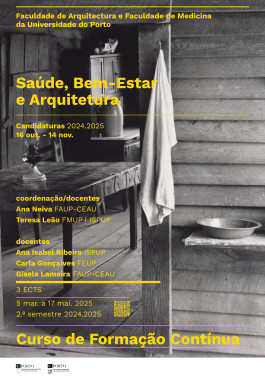
Health, well-being, and architecture
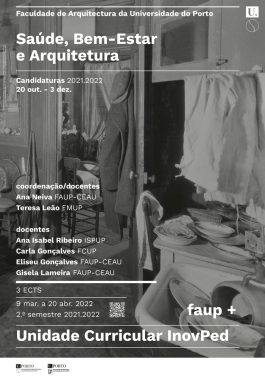
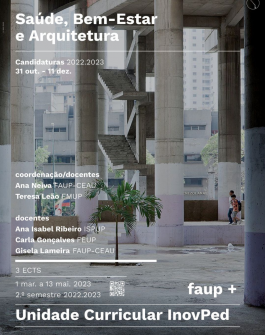
Health is determined by where a person lives. The design of private and public spaces, their implantation, the choice of building materials, and the stigma or prestige that they promote in their inhabitants and users define health. I believe that those who diagnose and treat patients - directly responsible for the promotion of health and prevention of disease, as health professionals - and those who design these spaces - as architects and landscape architects - must be aware of the role of built spaces for health promotion. They must be aware their role as stakeholders in ensuring that the population's health reaches its potential.
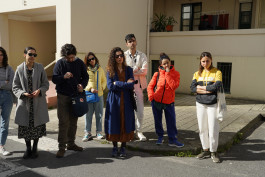
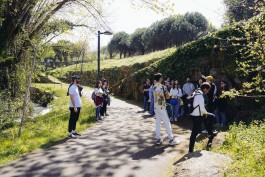
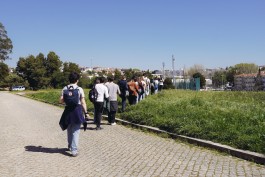
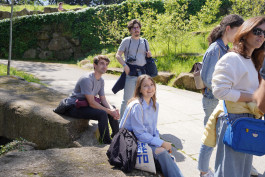
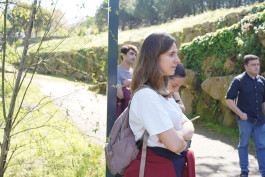
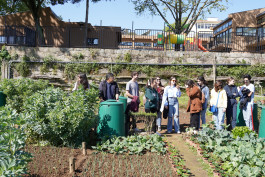
Together with Ana Neiva (architect, professor at the Faculty of Architecture of Porto University) we created an interdisciplinary course, joining medical and architecture students. We aimed to create an intersection of health and architecture, unveiling the health impact of (un)healthy living in private and public spaces while fostering the dialogue between architecture and medicine students, faculty, and researchers for the interdisciplinary discussion of future healthier environments.
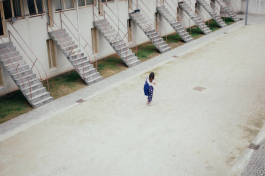
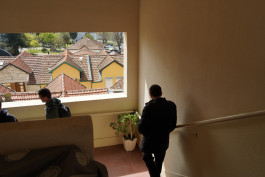
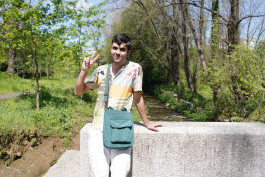
This pedagogical experiment has now been tested in two editions, with very positive results. Health and architecture students have been able to acquire basic concepts in both fields, set a common language, contact with inhabitants and users of private and public spaces, and, together, diagnose risk conditions and design modification proposals. Their curiosity, intelligence, and hard work, as well as inhabitants and partners gentleness, have been wonderful to witness.



Selected publications:
Leão T, Doetsch J, Henriques A, Fraga S (2024). Is gender equality associated with a longer healthier life? Ecological evidence from 27 European countries. Journal of Public Health, 46(1),136-143.
Leão T, Duarte G, Gonçalves G (2022). Preparedness in a public health emergency: determinants of willingness and readiness to respond in the onset of the COVID-19 pandemic. Public Health, 203:43-46
Sampaio Costa M, Queiroz Almeida D, Silva JP, Barros H, Ribeiro AI, Leão T (2024). Imagine your perfect park: a qualitative study on adolescents’ usage of green spaces, perceived benefits and preferences. Cities & Health, 1–12.
Nunes-Rubinstein, M., & Leão, T. (2021). Arguments used by proponents and opponents in Brazil’s regulatory discussions of e-cigarettes and heated tobacco products. Tobacco Control, 32(3):296-301.
Leão T, Amorim M, Fraga S, Barros H (2021). What doubts, concerns and fears about COVID-19 emerged during the first wave of the pandemic? Patient Educ Couns, 104(2):235–241.
Leão, T., Perelman, J., Clancy, L et al. (2020). Economic evaluation of five tobacco control policies across seven European countries. Nicotine and Tobacco Research, 22(7), 1202-1209.
Leão, T., Kunst, A. E., Perelman, J. et al (2019). Adolescents’ smoking environment under weak tobacco control: a mixed methods study for Portugal. Drug and alcohol dependence, 204, 107566.
Sandoval, J. L., Leão, T., Theler, J. M. et al. (2019). Alcohol control policies and socioeconomic inequalities in hazardous alcohol consumption: A 22-year cross-sectional study in a Swiss urban population. BMJ open, 9(5), e028971.
Sandoval, J. L., Leão, T., Cullati,et al. (2018). Public smoking ban and socioeconomic inequalities in smoking prevalence and cessation: a cross-sectional population-based study in Geneva, Switzerland (1995–2014). Tobacco control, 27(6), 663-669.
Leão, T., Campos-Matos, I., Bambra, C., Russo, G., & Perelman, J. (2018). Welfare states, the Great Recession and health: Trends in educational inequalities in self-reported health in 26 European countries. PloS one, 13(2), e0193165.
Leão, T., & Perelman, J. (2018). Depression symptoms as mediators of inequalities in self-reported health: the case of Southern European elderly. Journal of Public Health, 40(4), 756-763.
More: ORCID 0000-0002-7364-0100